 Famous People Are Human
Famous People with Disabilities
Famous people with disabilities are often an inspiration to those who are fully able. Fame, (as opposed to notoriety) is usually granted to those who have achieved something outstanding in life and there are no special concessions for those with a disability.
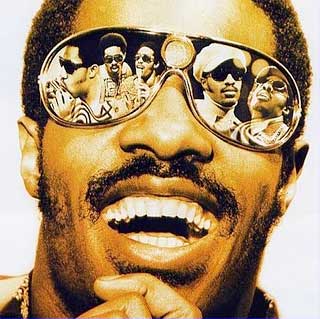 Stevie Wonder |
Despite impairment to one or more of their physical or mental abilities, they have to make their own way in life and, in fact, often face barriers in addition to their disability.
|
This is nothing new. Down the ages, people with disabilities have achieved fame through art, science and the humanities, overcoming great odds to do so.
Beethoven is frequently mentioned as an example of a hearing-impaired musical genius. Although his hearing was quite normal until around his twenty-fifth year, over time, it became gradually worse and he was eventually unable to hear, communicating through writing in “conversation books.” From the time his deafness became troublesome, around 1803 (he was born in December 1770), to the time he was unable to hear, in 1814, he produced six great symphonies, numbers 3 to 8.
Degrees of Separation …
In the U. S. Helen Keller with the aid of Anne Sullivan gave millions of blind (and deaf) people worldwide hope. Helen Keller was the first blind deaf person to earn a Bachelor of Arts degree, graduating from Radcliffe.
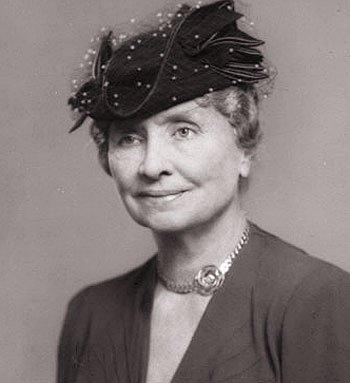
Helen Keller
Stevie Wonder (pictured above), who first came to prominence as Little Stevie Wonder at the age of twelve, was blind shortly after birth, believed to have been caused by too much oxygen. With his fame pre-dating The Beatles, Stevie Wonder is still at the top of his trade, still producing great songs. Not only is he a superstar vocalist, he is also much in demand as a harmonica player, with his unmistakable sound being heard on tracks from other recording stars.
Leader of the Band …
Famous people with disabilities are often noted for being leaders in their particular field, perhaps none more so than Professor Stephen Hawking, the theoretical physicist and cosmologist from England. Hawking didn’t develop his disability, amyotrophic lateral sclerosis (Lou Gehrig’s disease) until after he’d received his B.A. degree at Oxford University in 1962.
It was when he subsequently began researching his PhD. at Cambridge, that he noticed the symptoms. Eventually, he lost virtually all muscular control and communicates through a device that allows him to make small movements which are converted to audible speech. He received the Presidential Medal of Freedom, the United States’ highest civilian award in 2009.
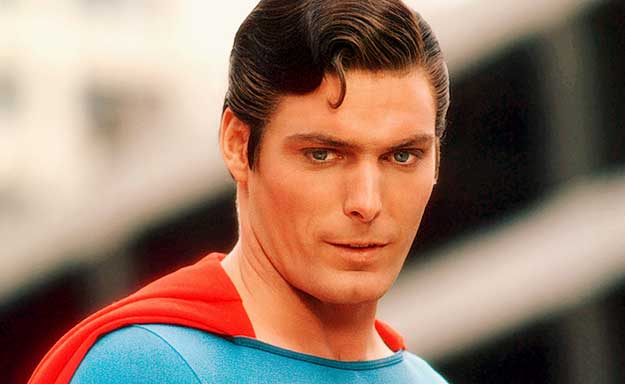
Christopher Reeve
Christopher Reeve (pictured above) is best known as an actor, for his portrayal of Superman, but he was also a film director, screenwriter, producer and author. At the height of his career, he was injured in a horse riding accident and became quadriplegic, necessitating breathing equipment and a wheelchair for the remainder of his life. He maintained his sense of humor, once he was rehabilitated, and he went on to champion the causes of stem cell research and people suffering from spinal cord injuries.
Of all the famous people with disabilities, one of the funniest in the last fifty years, Richard Pryor, had an appeal that stretched across all ages, all social groups and all colors. He could use offensive language and ideas in a completely inoffensive way, because at the bottom of everything he did was humor.
He simply made people laugh. He was diagnosed with multiple sclerosis in 1986, but that didn’t stop him continuing his life as a great comedian, until his death in 2005. Like all the disabled people mentioned here, Pryor is a true inspiration to those whose lives are free from disability.